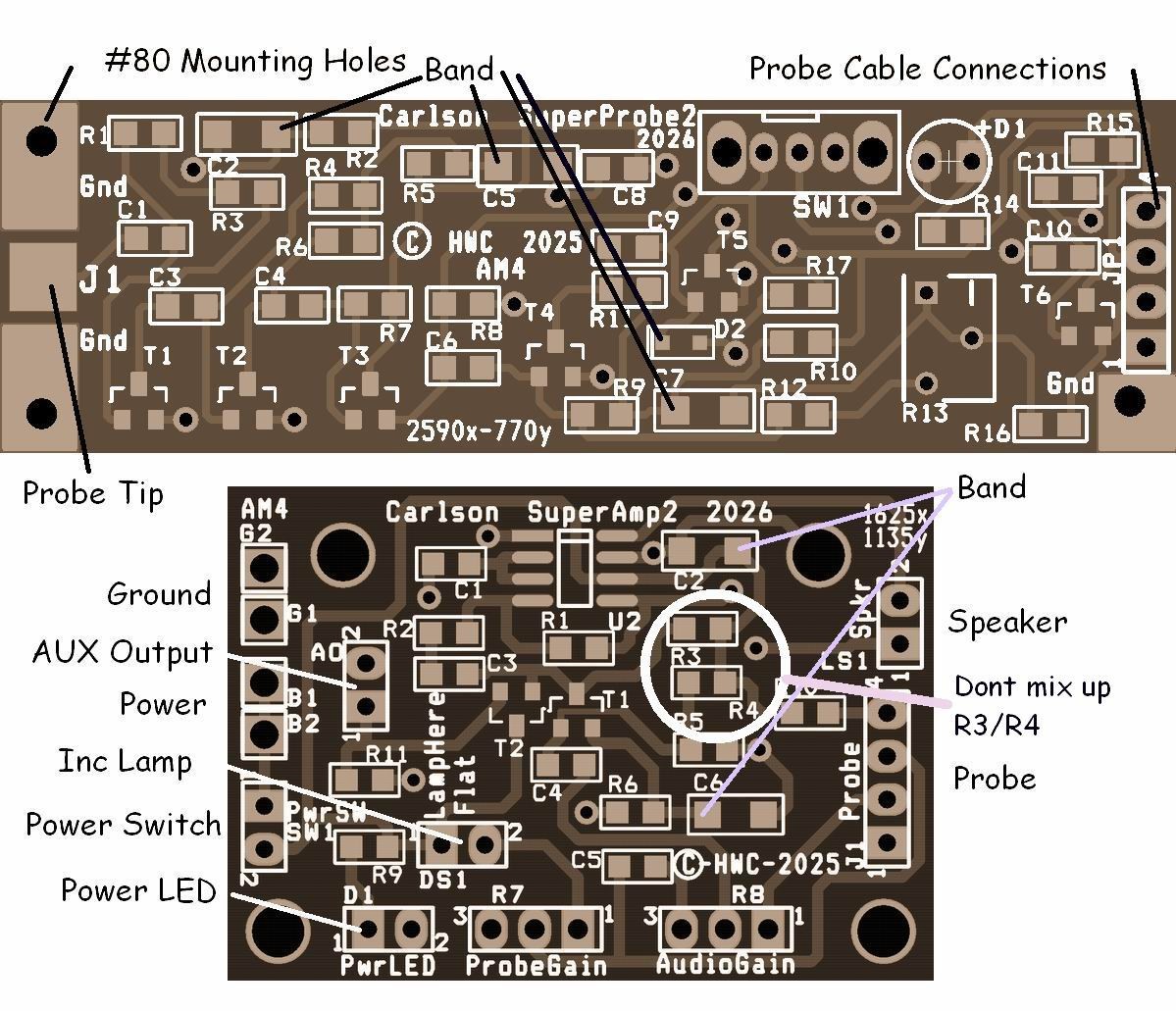
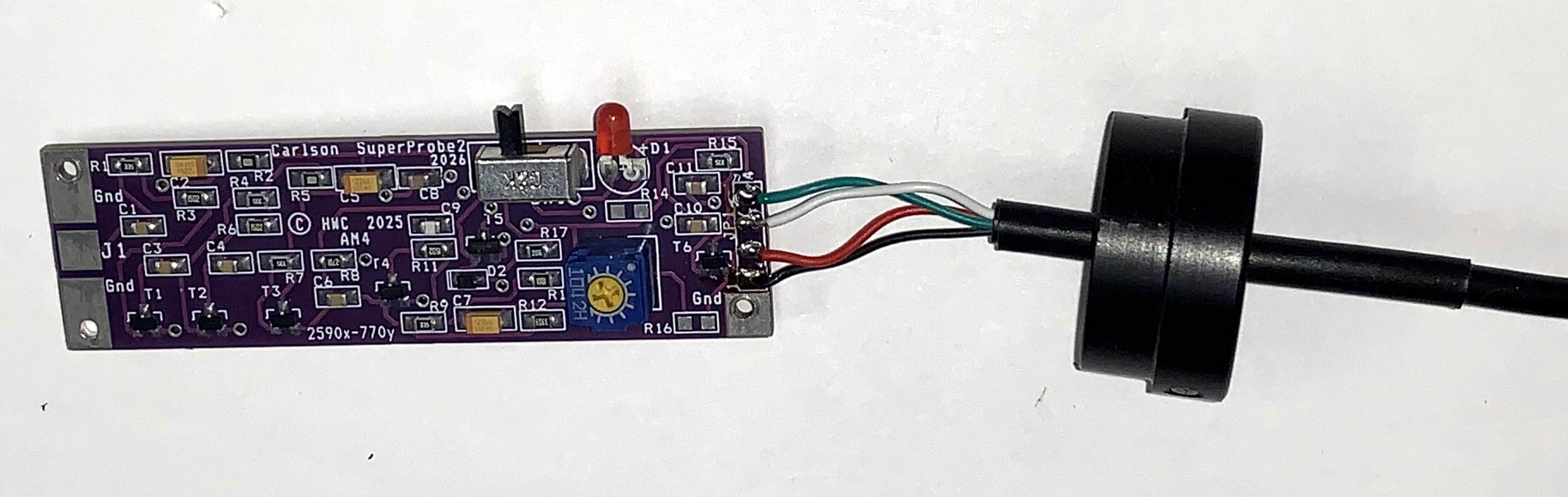
Figure 1
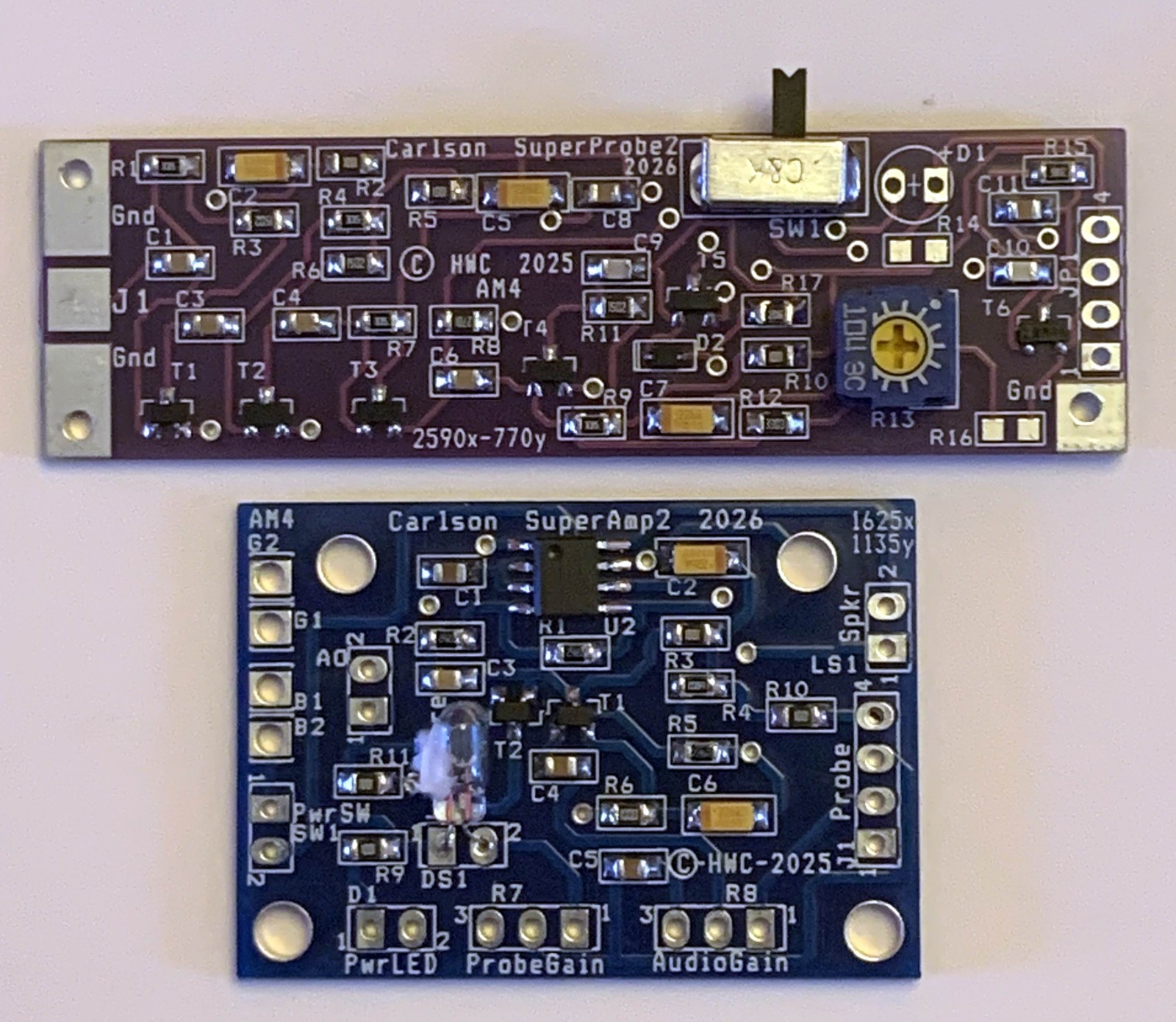
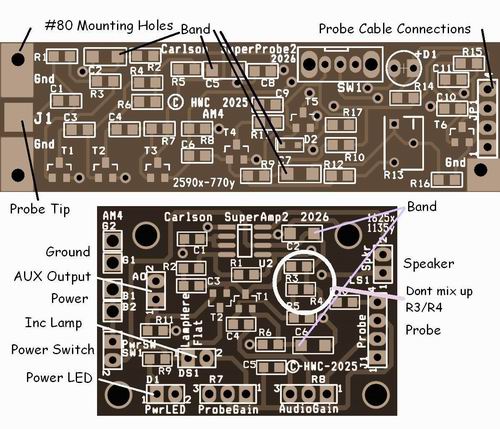 Figure 2
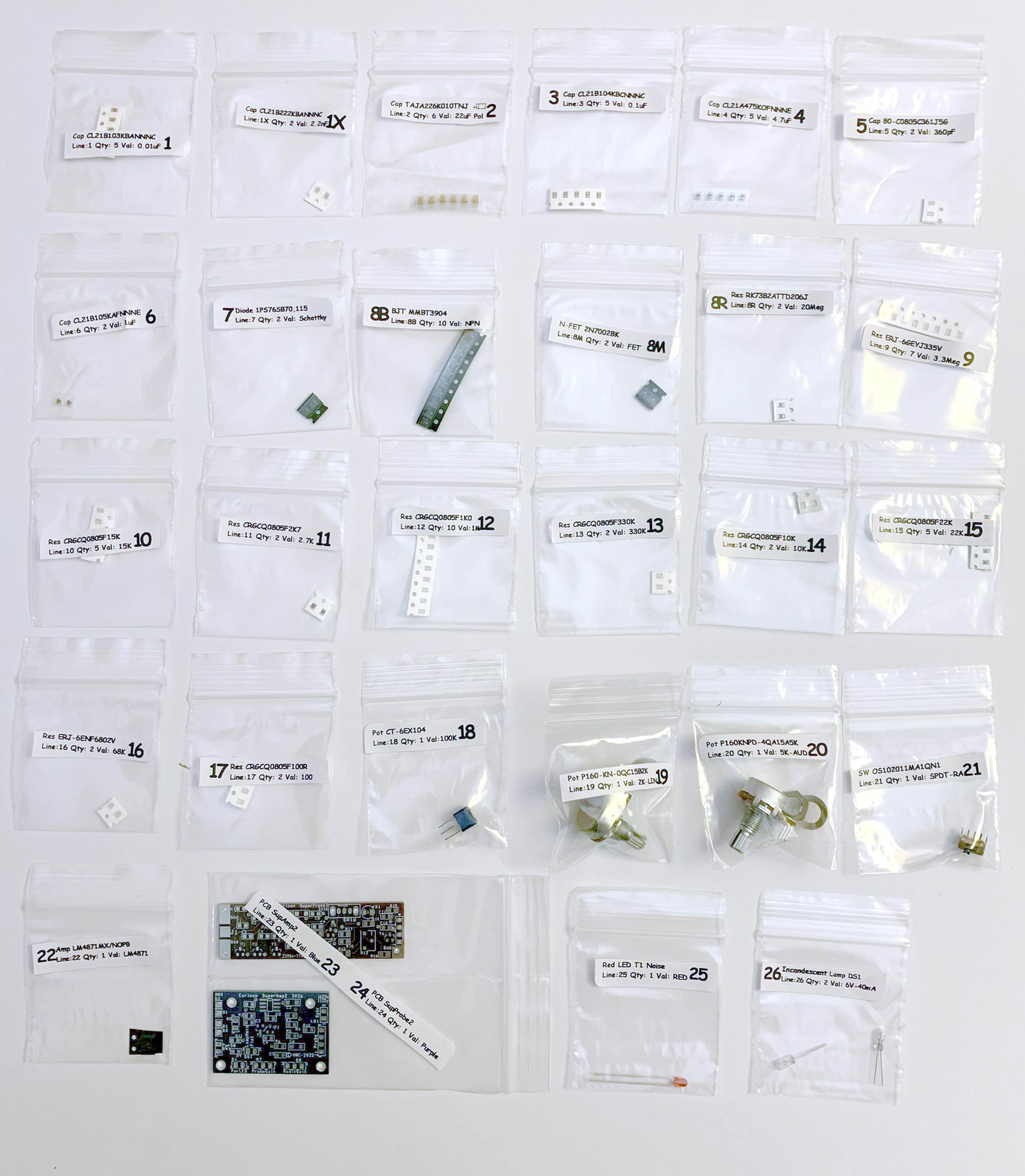
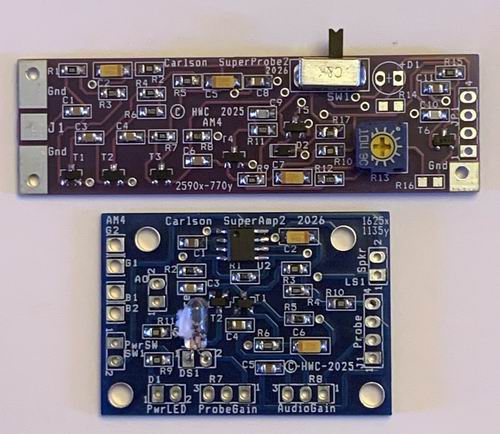 Figure 3
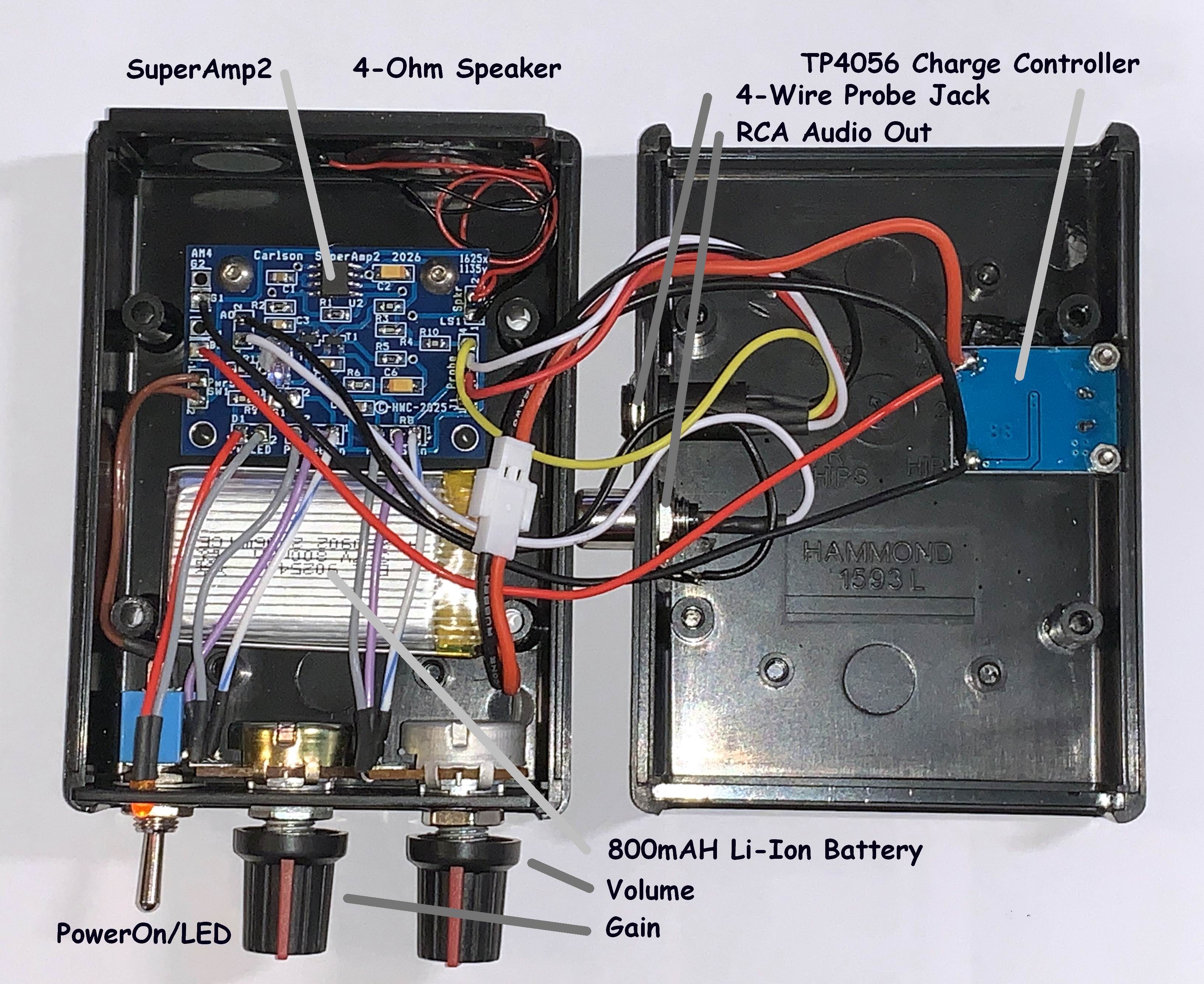
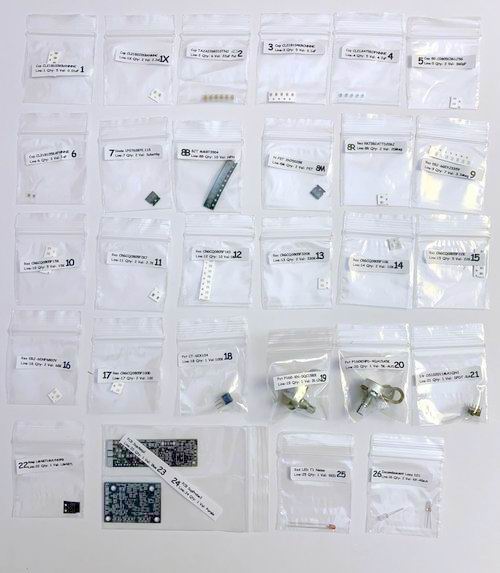 Figure 4
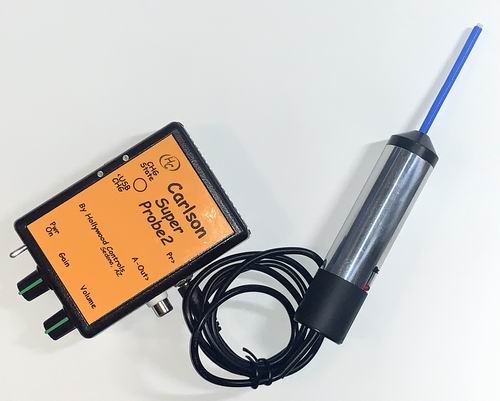 Figure 5
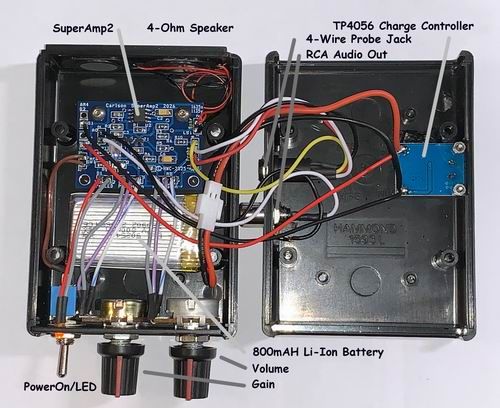 Figure 6
|
MK1ASM Assembled Kit with 26 Unique Parts
(PHOTOS Show Parts of Probe & Amplifier Cases NOT INCLUDED in the MK1ASM KIT!)
This is our MK1 PCB Kit fully assembled & tested.
As seen on YouTube and commented on many other sites, Paul Carlson designed a very useful non-contact
very high gain electronic probe for investigating just about any kind of electrical signal from audio to RF.
The design is well proven and open-sourced. There are also several open-source PCB designs for the probe and
amplifier, but most of them are SMD designs. This is likely the primary barrier to building a one-off
implementation of this design.
These 2 PCBs are well designed and reliable, and used in many DIY probes.
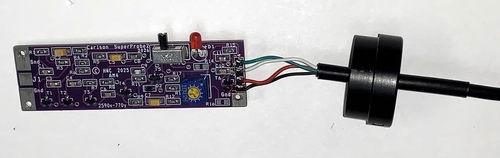
New and improved probe PCB with thru-hole wiring connections, improved SMD component orientation and
easier assembly. The POP noise LED driver is improved. The amplifier POT protection lamp is PCB mounted, and the
amplifier has a new buffered audio output driver.
Anyone interested in building the probe should first review:
Mr Carlson's YouTube video @ https://www.youtube.com/watch?v=uVkJqqZroN0
Yannick99 @ https://www.instructables.com/Carlsons-Super-Probe/
Web search for many other reviews and assembly hints.
Here is a great UT video of Carlson using the SuperProbe to locate a noisy component inside a complex transceiver.
He makes it seem so easy, and with the SuperProbe it is!
https://www.youtube.com/watch?v=uiK1BD7HILo
The Assembled Kit:
This kit includes only the main PCBs with all components mounted except the LED.
There are many other components needed to construct a complete probe and amplifier.
The kit includes the assembled PCBs as well as the 2 pots, LED and overload lamp used in the amplifier.
It DOES NOT include cases, packaging, wire, screws, probe-tips, batteries, speaker, or anything else that might be needed to
construct a complete SuperProbe.
The black ABS case shown in the pictures is made by Hammond, part #1593LBK 3.6" x 2.6" x1.1". Nothing smaller is really suitable.
Follow the included instructions in detail. Schematic details are included and are identical to the original design.
Some of the listing photos show a particular implementation in a very compact package. Such compactness is not necessary, but demonstrates what can be achieved.
|
|